

Sacramento Reading Intervention vs Tutoring: Understanding Which is Right For Your Child
Your child’s teacher suggests “extra reading help,” but you’re left wondering what that actually means. A tutor? An intervention program? A specialized school? As a Certified Dyslexia Therapist and mother to five neurodiverse sons, I’ve guided hundreds of Sacramento families through this decision. The distinction matters. Getting it wrong could harm your child’s confidence, academic progress, and self-belief.
Let me clarify the three levels of reading support, because knowing the difference could save you and your child years of struggle:
Regular Tutoring: Homework help and practice for kids who can read but need extra support. This works for students who missed school or need help keeping up. It won’t work for dyslexia. This is not what READ provides – we specialize exclusively in evidence-based dyslexia support.
Specialized Dyslexia Tutoring: Evidence-based programs like Wilson or Barton, based on the Orton-Gillingham method and delivered by trained specialists who understand how dyslexic brains process information. This targeted support helps while children remain in their current school.
Specialized Private Dyslexia School (True Intervention): When dyslexia affects every subject, every day, the entire educational environment needs restructuring. READ Academy offers a comprehensive intervention, where all subjects are taught using methods specifically designed for dyslexic learners.
Most families try these in order, losing precious time. At READ Academy, we see this pattern daily. This guide will help you identify which level your child actually needs from the start.
The Critical Difference: Tutoring Versus Intervention
Reading tutoring helps children who can read but need support with homework, comprehension strategies, or catching up after absences. Tutors reinforce classroom instruction using similar methods and offer more practice with existing skills.
Reading intervention rebuilds the foundational skills required for reading itself. It targets the underlying processing differences that prevent children from learning to read through typical classroom instruction. This approach uses specialized, research-based methodologies that differ significantly from standard teaching methods.
The distinction isn’t about severity, it’s about the nature of the difficulty. A child might struggle significantly with reading yet still need tutoring if the challenges stem from attention issues, frequent absences, or a lack of practice. However, a child reading below grade level may require intensive intervention if the difficulty stems from dyslexia or other language-based learning differences.
Red Flags That Signal the Need for Intervention
Parents often come to me after trying tutoring for six months or a year with minimal progress. They’re frustrated; their bright child works hard but continues to struggle. That pattern? High effort, limited progress despite intelligence. It’s the clearest signal that typical tutoring isn’t addressing the root issue.
I’ve seen this professionally for 25 years, but I lived it with my own five sons. Watching them work twice as hard as their peers for half the results taught me to recognize when a child needs intervention, not just more practice.
Your child may need a full-time dyslexia intervention if they:
- Struggle to sound out unfamiliar words despite repeated practice: They guess “house” when the word is “horse,” or say “when” instead of “where,” relying on the first letter and word shape rather than actually decoding the sounds in sequence.
- Read slowly and laboriously, exhausting themselves with simple texts: A chapter that takes classmates 15 minutes? Your child needs 45 minutes, and they’re mentally drained afterward. Not from lack of effort, but because their brain is working overtime to compensate for inefficient neural pathways.
- Spell phonetically but incorrectly: Writing “sed” for “said,” “beecuz” for “because,” or “frend” for “friend” shows they hear sounds but don’t know the rules. They’re applying logic to an illogical system they were never explicitly taught.
- Understand complex concepts when discussed verbally but can’t access them through reading: They participate brilliantly in class discussions about the solar system or the American Revolution. Yet they can’t independently read the textbook chapter covering the same material.
- Show significant gaps between their verbal intelligence and reading ability: Teachers describe them as bright, articulate, and insightful. Yet their reading scores place them 2-3 grade levels behind, a discrepancy that signals a processing difference, not an intelligence issue.
- Avoid reading whenever possible, despite being curious and engaged in other learning: They’ll happily watch documentaries, listen to podcasts, and discuss ideas for hours. But make excuses, develop stomachaches, or become defiant when asked to read independently.
- Made limited progress despite months of traditional tutoring or homework help: You’ve tried after-school programs, hired tutors, and spent countless hours on homework. Reading hasn’t improved significantly. The issue isn’t effort; it’s methodology.
These patterns suggest the brain isn’t building the neural pathways required for automatic word recognition. No amount of practice with traditional methods will construct these pathways, specialized intervention is required.
Why Specialized Tutoring Alone Often Isn’t Enough
Specialized dyslexia tutoring can help with reading foundations. Using programs like Wilson Reading System with trained specialists it provides targeted literacy support 2-4 times weekly. This approach works for some children whose challenges are mild or primarily focused on reading skills.
But here’s what even the best specialized tutoring can’t do:
- Transform how math, science, and social studies are taught during the school day
- Surround your child with peers who understand their struggles
- Provide dyslexia-trained teachers for every subject
- Replace 30+ hours of traditional classroom instruction designed for neurotypical learners
At READ Academy, we recognized these limitations and built something different. Rather than adding support around the edges of a broken system, we created an entire educational environment where:
- Every teacher is trained in dyslexia instruction – not just reading specialists, but math, science, and social studies teachers who understand how dyslexic minds learn
- Every lesson uses multisensory, structured methods – from morning math to afternoon history, all instruction is designed for students with learning differences
- Every student belongs to a community – surrounded by peers who share similar challenges and celebrate different ways of thinking
- Every moment supports their success – no more struggling alone in traditional classrooms, hoping today’s lesson will somehow click
This comprehensive approach is what distinguishes READ Academy from any tutoring program, no matter how specialized. We don’t supplement education – we transform it entirely.
When Your Child Needs Full-Time Intervention: Specialized Sacramento Dyslexia School
After 25 years working with struggling readers and raising five neurodiverse sons, I’ve learned that some children can’t thrive with part-time specialized tutoring alone. Even the best dyslexia tutoring two or three times a week isn’t enough when they’re struggling in every subject, every day. They need true intervention; their entire school day should be structured around how their brain learns best. Math class, science, social studies, everything needs to work differently.
Through my experience seeing countless children in tutoring who were not receiving adequate support in public schools, I learned that for some children, the entire learning environment needed to change. That’s why I founded READ Academy.
A specialized full-day dyslexia school becomes the necessary intervention when:
- Academic gaps widen despite intervention: Your child receives quality intervention but continues falling further behind in content areas due to reading demands. Part-time intervention alone isn’t sufficient.
- Emotional toll is significant: Children who cry before school, develop physical complaints on school mornings, or express that they’re “stupid” are experiencing trauma that interrupts learning.
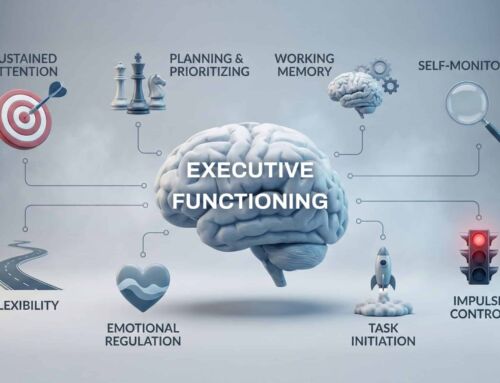
- Executive function challenges compound reading difficulties: Many students with dyslexia also struggle with organization and time management. Traditional classrooms with 25-30 students can’t provide the support these students need.
- The gap between potential and performance is severe: When testing shows average or above-average intelligence but reading skills lag two or more years behind, intensive intervention within a specialized setting often produces better outcomes.
At READ Academy in Sacramento, I’ve created a full-day private school where students in grades 2-12 with language-based learning differences receive a comprehensive education tailored to their individual learning styles. Every class uses structured literacy methods. Our curriculum includes Wilson Reading System for language arts, Making Math Real for mathematics, and Moving Beyond the Page for science and social studies. All evidence-based programs are adapted for learners with dyslexia.
Making the Right Choice for Your Child
We recommend starting with a comprehensive assessment for dyslexia. We are professionally trained in dyslexia and language-based learning differences. Using your child’s developmental history, educational records, and current standardized assessments, we conduct a thorough assessment of academic skills to identify language-based learning disabilities.
Results guide the decision. If the evaluation reveals dyslexia or language-based learning differences, specialized support is necessary. Regular tutoring won’t address the underlying processing differences.
Once you recognize that your child requires specialized help, consider the following key factors. Severity matters; some children progress well with specialized tutoring twice a week, while those with significant gaps often require the comprehensive intervention of READ Academy. The rate of progress tells you a lot: a measurable improvement in 3-4 months with specialized tutoring suggests it’s working; minimal progress despite quality tutoring indicates that full intervention at a specialized school is needed. Whole-child wellbeing can’t be ignored; if self-esteem, social relationships, or mental health are suffering, a comprehensive educational restructuring of a specialized school provides both academic support and emotional healing.
Finding the Right Level of Support in Sacramento
I designed READ Academy and READ Learning Center to offer Sacramento families a clear path forward.
READ Academy is a comprehensive dyslexia intervention, offering a full-day private school experience for students in grades 2 through 12. When reading challenges affect every class, emotional well-being deteriorates, or gaps continue to widen despite tutoring, READ Academy provides comprehensive educational restructuring to address these issues. Every subject, from morning to afternoon, employs teaching methods specifically designed for students with dyslexia. This is intervention in its fullest sense, replacing the traditional classroom model that wasn’t built for how these students learn.
READ Learning Center provides specialized dyslexia tutoring through 1:1 sessions, typically 2-4 times per week, while students remain in their current school. This approach works well for children whose reading challenges can be addressed through targeted, evidence-based support, without requiring a complete change in their educational environment. We serve students from public/private schools, as well as homeschoolers. We’re also vendors for homeschool charters, including Horizon, Cottonwood, Sequoia Grove, South Sutter, Visions, and more.
Both settings use the same evidence-based methodologies: Wilson Reading, Orton-Gillingham principles, and multisensory instruction. Consistent, coordinated support wherever your child receives services.
Your Next Step
If your child struggles with reading despite being bright and working hard, they deserve more than hope and harder work. They need the right level of support delivered with sufficient intensity and expertise.
For some children, specialized tutoring at READ Learning Center provides the targeted help they need. For others, true intervention means changing their entire educational experience at READ Academy, where every moment of the school day is designed for how dyslexic learners actually learn.
At READ Academy, we passionately believe that every child has a success story that is waiting to be written. Call READ Academy at (916) 258-2080 to discuss which path is right for your child.
Or schedule a comprehensive dyslexia assessment to gain clarity and take the first step to confidence. Your child’s bright future starts here. Schedule an assessment today.
About the Author: Dr. Leah Skinner, Ed.D.
Dr. Leah is a Certified Dyslexia Therapist with a Doctor of Education in Reading, Literacy, and Assessment and a Master of Education in Dyslexia Specialization. She brings over 20 years of experience in structured literacy, dyslexia intervention, and educational advocacy. As the founder of READ Academy of Sacramento and READ AcademyREAD Learning Center and a mother of five neurodivergent sons, four of whom have dyslexia, she has spent two decades watching this from both sides of the table, as a clinician and as a mother.